
Wood veneer does more than recreate the beauty of natural wood. It creates opportunities for pattern, movement, and craftsmanship. With “sketch faces”, veneer becomes more than a surface finish. It becomes a design feature.
Sketch faces are custom veneer layouts created by arranging veneer pieces into decorative geometric patterns such as chevron, box, reverse box, diamond, and other marquetry-inspired designs. These layouts bring depth, symmetry, and visual rhythm to furniture, millwork, wall panels, doors, and architectural interiors.
That is the appeal of sketch face veneer work. Instead of relying on a single grain direction across a flat surface, designers can create bold focal points, subtle texture, or highly detailed custom looks using real wood veneer. A conference table feels architectural. A feature wall gains movement. Cabinetry becomes custom millwork.
In this post, we will explore how sketch face veneer patterns elevate interiors, the most popular pattern styles used in modern and traditional spaces, and how to select veneer species, grain direction, and layout techniques that create balanced, high-end results.
Why Sketch Face Veneers Work
Sketch face patterns create visual interest through geometry, grain direction, and symmetry. Rather than adding decoration with paint or printed surfaces, sketch faces use the natural character of real wood veneer to create movement and detail.
The effect works because the eye naturally responds to pattern and directional change. A chevron layout creates energy and motion. A diamond pattern adds symmetry and structure. Reverse box layouts create framing and depth across large surfaces.
Wood veneer is especially well suited for sketch face applications because it can be cut, aligned, and assembled with precision. Compared to solid lumber, veneer offers greater flexibility for detailed layouts, intricate marquetry, and large-scale pattern consistency.
For decades, designers and millworkers have used sketch face veneer techniques in luxury hospitality spaces, executive interiors, retail environments, custom residential projects, and architectural millwork because they combine craftsmanship with design flexibility.
The Design Benefits of Sketch Face Veneers
More Customization
Sketch face veneer layouts create a truly custom appearance. Designers can tailor patterns to fit a brand identity, architectural style, or interior palette. Even a simple veneer species can feel elevated when arranged in a geometric pattern.
Stronger Visual Impact
Patterned veneer layouts naturally create focal points. A diamond-matched conference table or chevron wall panel immediately draws attention and gives a space more visual structure.
Better Integration Across Design Styles
Sketch face patterns work across both traditional and contemporary interiors. Classic spaces often use framed layouts, marquetry details, and reverse box patterns. Modern spaces lean toward clean chevrons, directional grain layouts, and minimalist geometric symmetry.
High-End Appearance with Real Wood
Sketch face veneer work highlights the craftsmanship and authenticity of natural wood. The result feels architectural, refined, and custom without sacrificing the warmth of real wood surfaces.
Popular Sketch Face Veneer Patterns
The arrangement of veneer sheets has just as much impact as the species itself. Pattern selection influences how formal, modern, bold, or subtle a finished surface feels.
Chevron Veneer Patterns: Clean Geometry and Movement
Chevron is one of the most recognized sketch face patterns. Veneer pieces are cut at matching angles so the grain meets in a continuous point, creating strong directional movement across the surface.
Chevron veneer patterns are popular in:
- Wall panels
- Cabinet doors
- Conference tables
- Reception desks
- Hospitality millwork
Chevron layouts work especially well in modern interiors because they feel clean, sharp, and intentional. Rift white oak, walnut, ash, and straight-grain veneers are common choices because their consistent grain emphasizes the geometry of the pattern.
High-contrast species combinations create bold visual definition, while tonal pairings create a more subtle architectural look.
Box and Reverse Box Patterns: Structured and Dimensional
Box patterns use veneer grain direction to create framed square or rectangular layouts. Reverse box patterns invert the grain orientation to create additional contrast and depth.
These sketch face layouts are commonly used in:
- Executive desks
- Luxury cabinetry
- Elevator interiors
- Wall panel systems
- Decorative door faces
Box and reverse box layouts create order and symmetry, making them ideal for large architectural surfaces. Grain direction becomes the defining design element, especially when paired with clean contemporary forms.
Reverse box patterns are particularly effective in spaces that need subtle detail without excessive ornamentation.
Diamond Match Veneers: Symmetry and Visual Focus
Diamond-matched veneer patterns create striking symmetry by arranging veneer sheets into repeating angular layouts. The effect feels both decorative and architectural.
Diamond sketch faces are often used for:
- Feature walls
- Boardroom tables
- Hospitality interiors
- Decorative ceiling panels
- Luxury retail fixtures
This pattern works especially well with figured veneer species because the grain movement becomes part of the geometric effect. Walnut, eucalyptus, figured maple, and exotic veneers are commonly used to emphasize the dimensional appearance.
Diamond matching creates strong focal points while still maintaining the warmth and natural variation of real wood.
Sunburst Veneer Patterns: Radial Movement and Statement Design
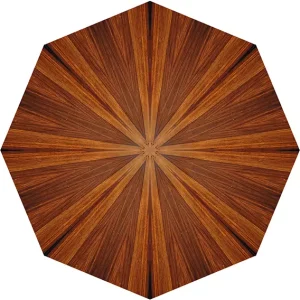
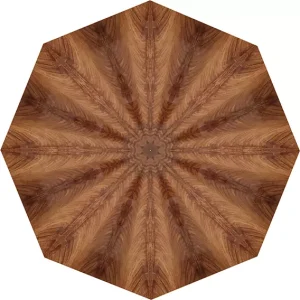
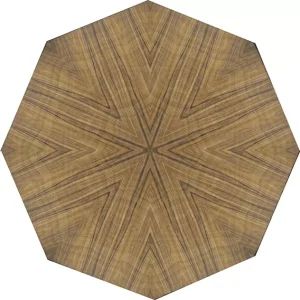
Sunburst veneer patterns create one of the most dramatic and recognizable sketch face layouts in architectural woodwork. In a sunburst pattern, veneer pieces radiate outward from a central point, creating the appearance of spreading light or expanding movement across the surface.
The effect feels dynamic, symmetrical, and highly custom. Because the grain direction changes continuously around the center point, sunburst layouts naturally draw attention and create a strong focal feature within a space.
Sunburst sketch faces are commonly used for:
- Conference and dining tables
- Decorative wall panels
- Ceiling features
- Luxury hospitality interiors
- Elevator panels
- Statement cabinetry and doors
This pattern works especially well with straight-grain and figured veneers because the grain movement becomes part of the visual effect. Walnut, white oak, eucalyptus, maple, and exotic veneer species are frequently selected for sunburst applications depending on whether the design goal is subtle sophistication or bold contrast.
In modern interiors, sunburst patterns can add movement and warmth to otherwise minimal spaces. In traditional settings, they reinforce craftsmanship and decorative detail without feeling overly ornate.
Because the layout relies heavily on precision cutting and grain alignment, veneer consistency is critical. Clean seams, balanced symmetry, and careful veneer matching help ensure the pattern feels intentional and refined rather than busy.
Lighting also plays a major role in how a sunburst veneer pattern appears. As light moves across the surface, the changing grain direction creates shifts in tone and reflectivity that add depth and dimension throughout the day.
When used thoughtfully, a sunburst sketch face can transform an ordinary surface into a true architectural centerpiece.
Marquetry and Custom Sketch Faces
Marquetry takes sketch face veneer work even further by combining multiple veneer pieces into decorative geometric compositions, borders, motifs, or fully custom layouts.
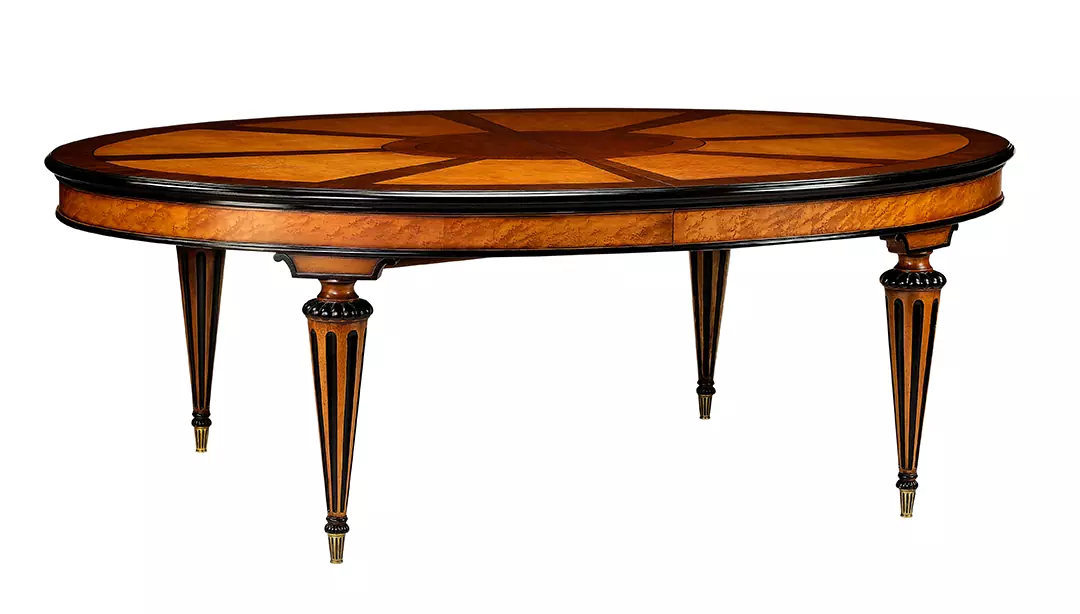
This technique has a long history in fine furniture and architectural millwork, but modern marquetry often focuses on clean geometry and controlled contrast rather than excessive ornamentation.
Marquetry-style sketch faces are ideal for:
- Luxury hospitality interiors
- Custom furniture
- Decorative wall panels
- Statement doors
- High-end residential millwork
Because marquetry relies on precision, veneer selection, grain alignment, and layout planning are critical to achieving a clean finished appearance.
How to Choose Veneers for Sketch Face Patterns
Not every veneer species works equally well in patterned layouts. The best sketch face designs balance grain consistency, color, and texture.
Start With Grain Direction
Grain direction is one of the most important parts of sketch face design. Since the pattern itself is created through directional changes, consistent grain helps maintain clean geometry.
Straight-grain and rift-cut veneers are often preferred because they create sharper, more controlled layouts.
Consider how grain direction influences the feel of the space:
- Vertical grain feels formal and architectural
- Horizontal grain feels wider and calmer
- Angled grain creates movement and energy
The grain should reinforce the pattern rather than compete with it.
Consider Color and Contrast
Color contrast determines how bold or subtle the sketch face pattern appears.
Low Contrast
Using similar tones creates a refined, understated appearance that emphasizes texture more than geometry.
Medium Contrast
Moderate variation adds visual depth without overpowering the room.
High Contrast
Strong light-dark pairings create dramatic focal points and emphasize pattern definition.
Walnut paired with white oak remains one of the most popular combinations because it balances warmth with contrast.
Pay Attention to Texture and Finish
Open-grained species like oak create more texture, while tighter-grained veneers such as maple or eucalyptus feel smoother and more refined.
Finish consistency also matters. Keeping the sheen level consistent across the entire sketch face helps unify the design even when grain direction changes dramatically.
Tips for Achieving a Balanced Sketch Face Design
Let the Pattern Lead
Sketch face layouts already create strong visual interest, so restraint is important. Allow the geometry and grain movement to become the focal point rather than overcomplicating the design with too many species or excessive contrast.
Limit the Number of Veneers
Most successful sketch face designs use one or two veneer species. Too many species can make the pattern feel busy and reduce the clarity of the layout.
Scale the Pattern to the Surface
Large-scale patterns often work best on expansive surfaces such as conference tables or feature walls. Smaller, tighter layouts are typically more effective on cabinetry and furniture details.
Test Veneers in Real Lighting
Lighting dramatically changes how veneer patterns appear. Directional grain can reflect light differently depending on the angle and finish sheen.
Always review veneer samples together under the actual lighting conditions where the installation will live.
Sketch Face Veneers in Traditional Interiors
Sketch face veneer work has deep roots in traditional craftsmanship. Historic furniture makers often used marquetry, parquetry, diamond matching, and framed veneer layouts to create elegance and visual structure.
In traditional spaces, sketch face patterns can add:
- Richness to wall paneling
- Formality to dining tables
- Craftsmanship to custom cabinetry
- Decorative detail to doors and millwork
Walnut, cherry, mahogany-look veneers, maple, and quartered oak remain popular choices for traditional applications.
The key is refinement. Traditional sketch face layouts tend to rely on symmetry, balance, and controlled detailing.
Sketch Face Veneers in Modern Interiors
Modern interiors often rely on material detail instead of ornamentation. Sketch face veneers add warmth, texture, and movement while still maintaining clean architectural lines.
Modern applications commonly include:
- Chevron wall panels
- Reverse box cabinetry
- Diamond-matched tables
- Minimalist architectural millwork
- Hospitality feature installations
White oak, walnut, ash, and reconstituted veneers are frequently used because they provide clean grain consistency that complements geometric layouts.
In minimalist interiors, even subtle directional grain changes can create significant visual impact.
Practical Sketch Face Ideas for Your Next Project
If you are new to sketch face veneer work, start with a focused application rather than an overly complex layout.
Consider these ideas:
- Chevron veneer cabinet inserts
- A diamond-matched conference tabletop
- Reverse box wall panels
- A framed veneer feature wall
- Custom marquetry reception desks
- Decorative door faces with geometric veneer layouts
These applications allow designers to explore grain direction, pattern scale, and veneer combinations while keeping the design controlled and cohesive.
Final Thoughts
Sketch face veneer patterns combine craftsmanship, geometry, and the natural beauty of real wood into surfaces that feel architectural, custom, and memorable. Whether you are designing a chevron wall panel, a diamond-matched table, or a marquetry-inspired feature installation, the right veneer layout can completely transform a space.
Patterns such as chevron, box, reverse box, and diamond matching create structure and movement, while careful veneer selection brings warmth and balance. From traditional millwork to modern interiors, sketch face veneer work offers nearly endless design flexibility.
If you are planning a furniture, millwork, or interior design project, sketch face veneers provide an opportunity to create something distinctive using real wood craftsmanship and precision layout techniques.
Explore sketch face veneer patterns for your next project and discover how custom layouts, directional grain, and marquetry-inspired craftsmanship can elevate furniture, millwork, and architectural interiors.
